 Click to enlarge
The Scholarship Interview Guide
What top independent schools really ask at interview, one answer method for any question, and school-by-school profiles.
- The six signals interviewers listen for
- The A.R.E. answer method and how to think aloud
- Ten families of question and the stimulus tasks
- Coached answers that now cost marks, with better replies
- School profiles: KEHS, King Edward's, Solihull, Warwick and the London approach
- A mock interview scorecard and a preparation sheet
Want the whole series? The full Creative Writing series is £129, under £17 a book.
How this book is used in our course
Read the first three chapters together, then build your child's own stories on the preparation sheet: books, interests, something they worked hard at. Practise one question family a session using A.R.E., out loud, never from a script. Read the profile of each school you are applying to, and finish with a full mock interview against the scorecard.
Where it sits in the series
- Previous book in the series: Book 7, The 11+ Question Types Guide: English Comprehension
- This is the last book in the series.
What's inside Creative Writing Mastery 8
Four real pages from the book, so you can see exactly what your child will work from. All 8 sample pages are in the viewer.
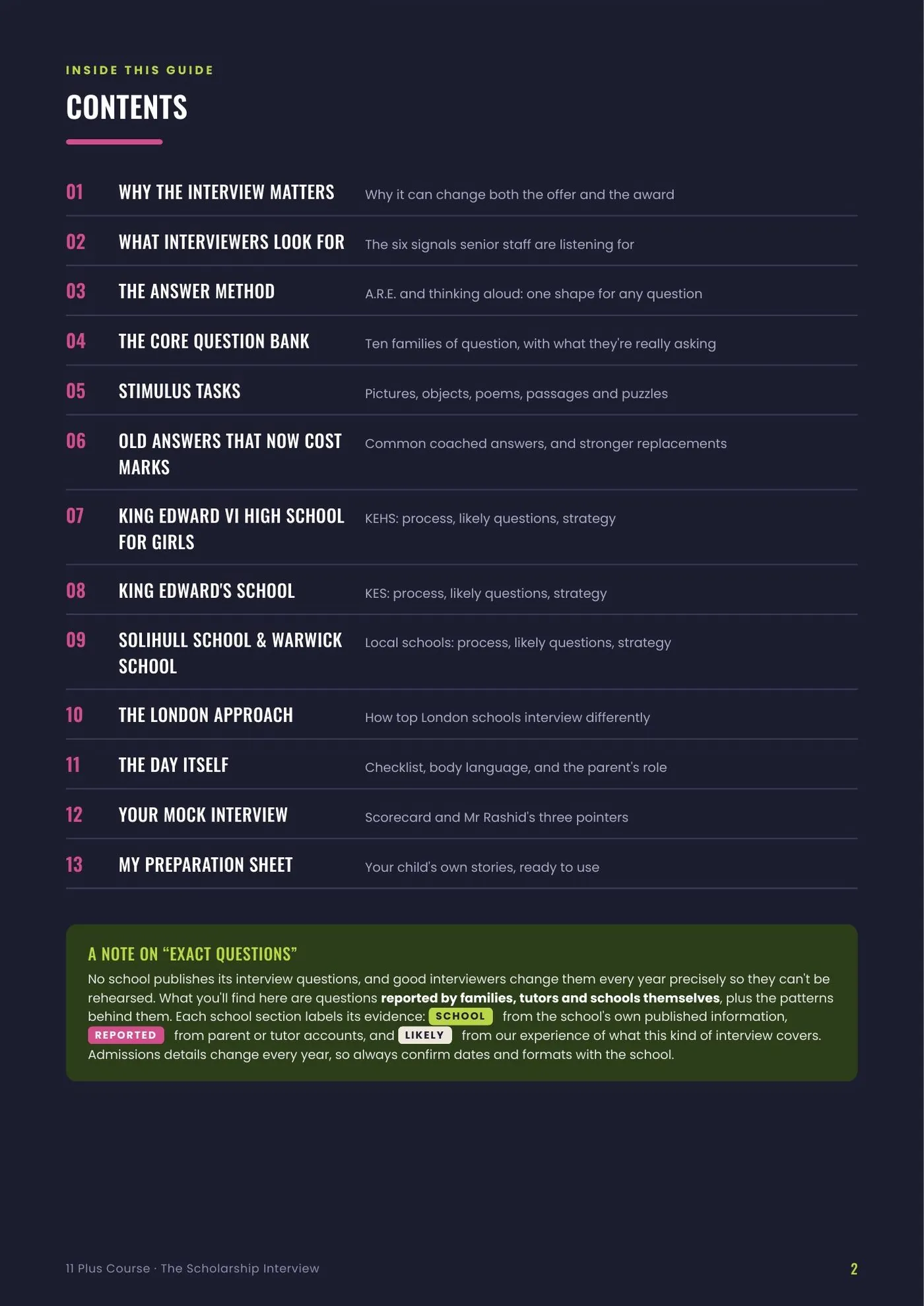
Thirteen chapters, from what interviewers listen for to your child's own preparation sheet.
Why the interview can change both the offer and the award. The six signals senior staff listen for. One answer method for any question. Ten families of question. Stimulus tasks. The coached answers that now cost marks. Profiles of King Edward VI High School for Girls, King Edward's School, Solihull School and Warwick School, and how top London schools interview differently. Then the day itself, the mock interview scorecard and a preparation sheet.
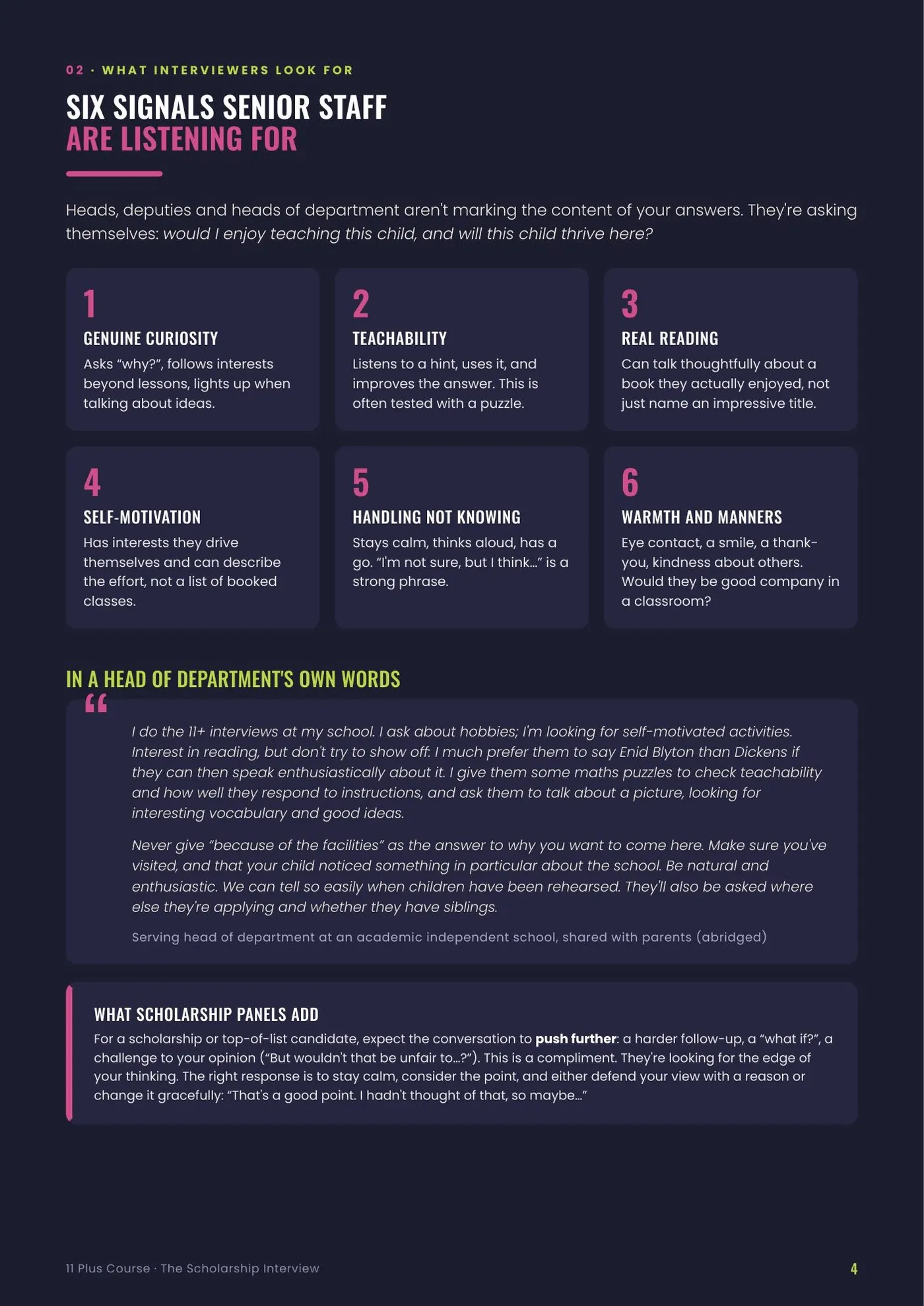
Interviewers are not marking the content. They are asking: would I enjoy teaching this child?
Curiosity that goes beyond lessons. Using a hint to improve an answer. Talking thoughtfully about a book they actually enjoyed, not naming an impressive title. Interests they drive themselves. Staying calm and thinking aloud. Each signal explained, so a parent knows what to practise and what to stop rehearsing.
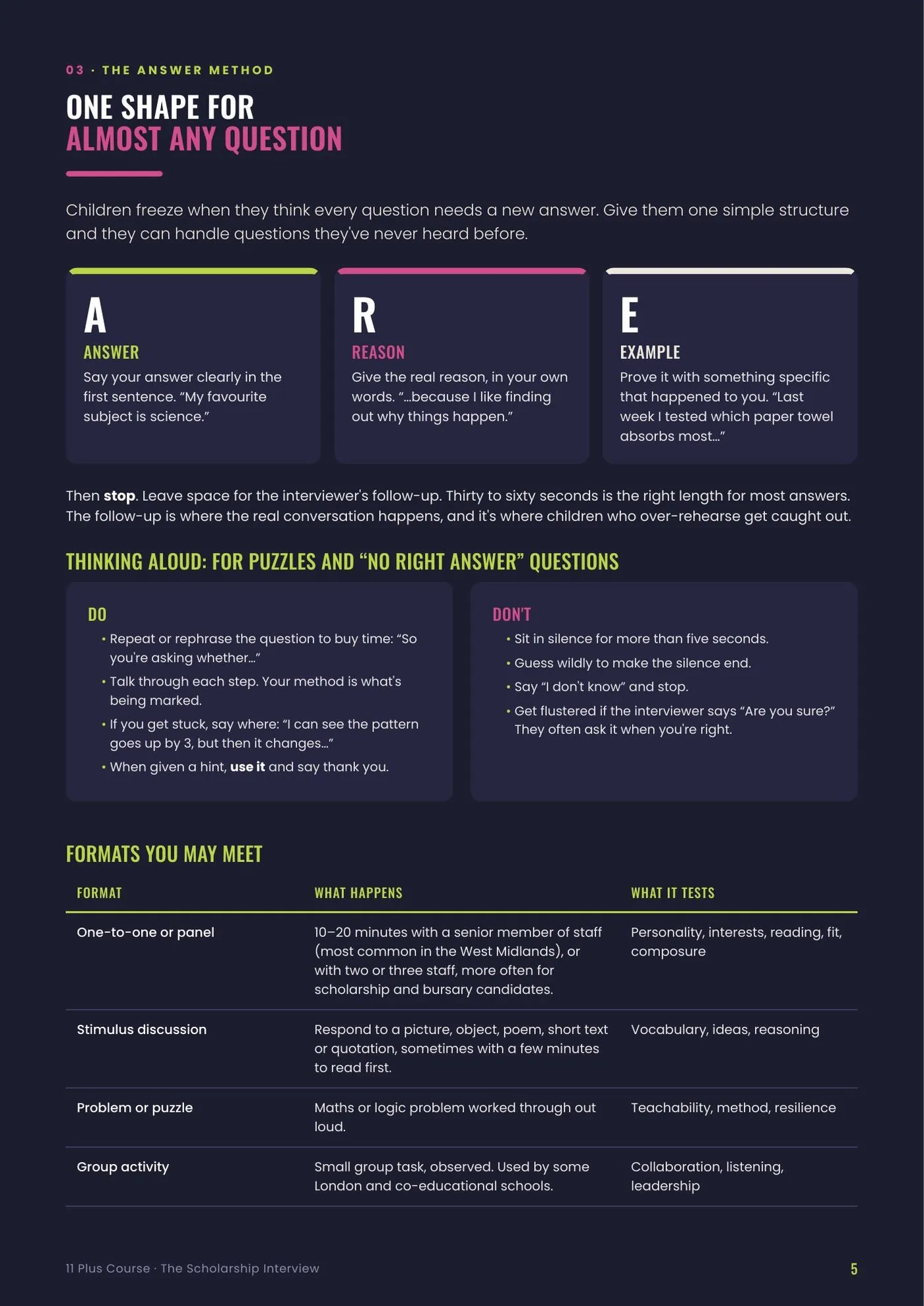
Answer, Reason, Example. Then stop.
Children freeze when they think every question needs a new answer. A.R.E. gives them one shape for almost any question: say the answer, give the real reason in their own words, prove it with something that actually happened. Thirty to sixty seconds, then leave room for the follow-up, where the real conversation starts. Plus how to think aloud on puzzles with no right answer.
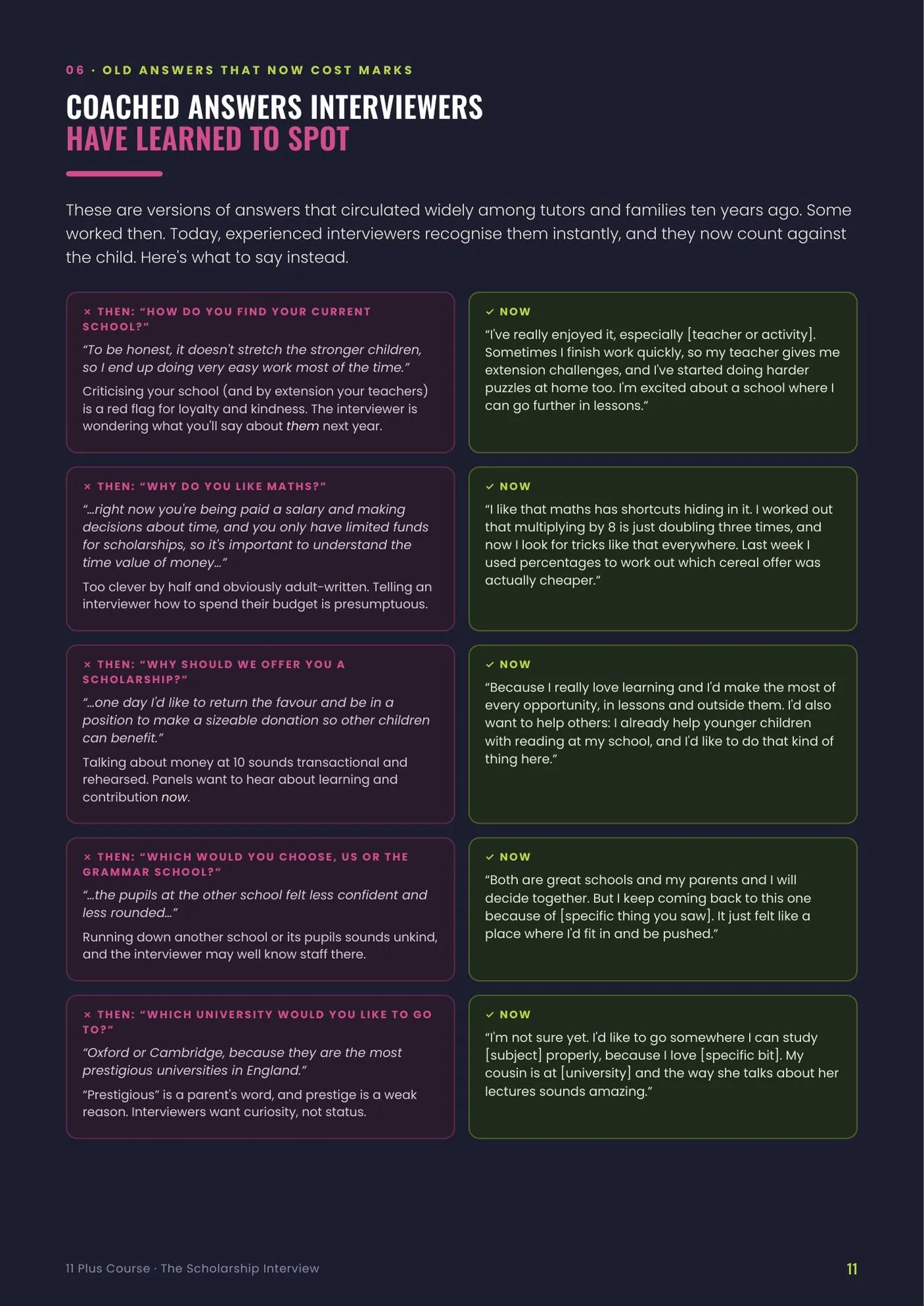
The rehearsed answers interviewers have learned to spot, and what to say instead.
Criticising your current school. Telling the interviewer how to spend the scholarship budget. Promising a donation one day. Answers that once circulated among tutors and families now count against the child. Each one is shown as it was, why it fails, and a stronger reply in a child's natural voice.
All 13 chapters in the book follow the pattern shown here.